David Brooks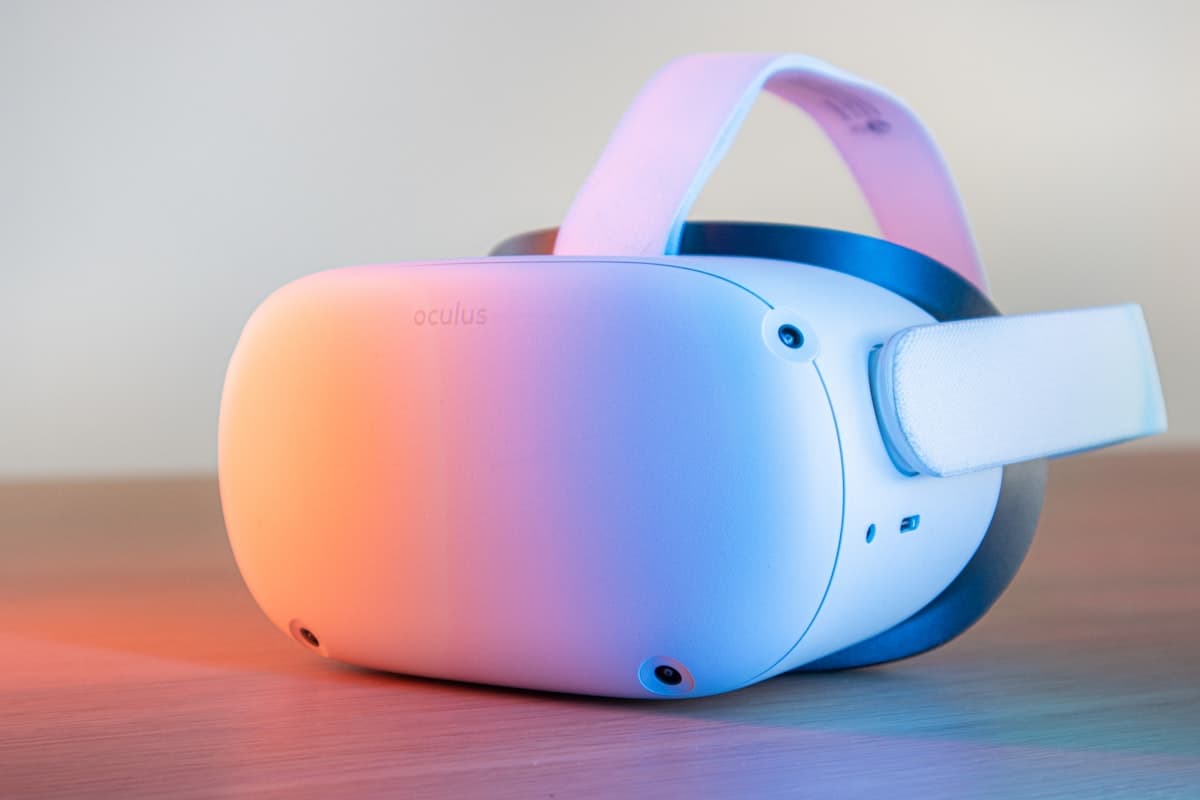
The metaverse is dead. Meta just signed its death certificate.
I won't sugarcoat it: what happened on January 13, 2026, is the official end of one of the most expensive corporate bets in history. Meta announced the layoff of more than 1,500 employees from Reality Labs, the closure of three VR game studios, and the cancellation of its enterprise business plans.
Four years after Mark Zuckerberg changed Facebook's name to "Meta" to signal his metaverse bet, the company is doing the exact opposite: abandoning it.
After years of following this story, my verdict is clear: the metaverse was never a product—it was a $73 billion distraction.
The disaster by the numbers: $73 billion in losses
Before analyzing what went wrong, let me show you the magnitude of the financial hole.
Reality Labs cumulative losses
| Year | Operating losses | Notes |
|---|---|---|
| 2020 | $6.6 billion | "Metaverse" beginnings |
| 2021 | $10.2 billion | Rebrand to "Meta" |
| 2022 | $13.7 billion | Horizon Worlds launched |
| 2023 | $16.1 billion | Quest 3 launched |
| 2024 | $17.7 billion | Quest sales decline |
| Q3 2025 | $4.4 billion | Just one quarter |
| Total | ~$73 billion | And counting |
To put this in perspective:
- $73 billion is more than the GDP of countries like Uruguay, Costa Rica, or Panama
- It's enough to buy all of Adobe and still have change left over
- It's 10 times what Disney paid for Lucasfilm and Marvel combined
And the return on this massive investment? $470 million in revenue in Q3 2025. Less than 1% of Meta's total revenue.
What just happened: timeline of the debacle
January 13, 2026: The announcement
Andrew Bosworth, Meta's CTO, published an internal memo confirming:
- 10% layoffs at Reality Labs (~1,500 of 15,000 employees)
- Closure of three VR studios:
- Twisted Pixel (Deadpool VR creators, acquired in 2022)
- Sanzaru Games (Asgard's Wrath creators, acquired in 2020)
- Armature Studio (Resident Evil 4 VR, acquired in 2022)
- Horizon Workrooms discontinued (virtual office spaces) on February 16
- End of B2B Quest sales on February 20
Meta's official statement was revealing:
"We said last month that we were shifting some of our investment from metaverse toward wearables. This is part of that effort, and we plan to reinvest the savings to support the growth of wearables this year."
The timing isn't coincidental
The announcement came just as:
- Quest sales dropped 16% year-over-year (only 1.7 million units in the first 9 months of 2025)
- Ray-Ban Meta glasses tripled their sales and have waitlists extending into 2026
- Meta closed its $2 billion acquisition of Manus AI to power its AI efforts
- The AI division generates more engagement than any VR product
Why the metaverse failed: 5 reasons nobody wants to admit
After following this story for years, these are the real reasons for the failure:
1. Nobody asked for the metaverse
If you ask me directly, this was the fundamental mistake: Zuckerberg built a solution looking for a problem.
Who woke up one day thinking "I'd love to have work meetings as a legless Wii avatar"? Nobody. The metaverse was a top-down vision imposed on users who didn't need it.
2. The hardware was never ready
VR headsets are:
- Uncomfortable after 30-60 minutes
- Socially isolating
- Prone to causing motion sickness
- Too expensive for mainstream adoption ($500+)
Meta sold ~5.6 million Quests in 2024. For context, Apple sells that many iPhones in one week.
3. The content was terrible
Horizon Worlds, Meta's flagship social platform, looked like a 2005 game. Users constantly mocked the graphics and the avatars' lack of legs.
While Roblox has 80 million daily active users, Horizon Worlds struggled to maintain hundreds of thousands.
4. Apple's competition never materialized
Meta expected Apple to legitimize the VR market with Vision Pro. Instead:
- Vision Pro sold ~500,000 units (less than expected)
- Apple also reduced production and laid off the team
- The entire VR market dropped 42.8% in 2025
Without a strong competitor validating the market, Meta was left alone pushing a category nobody wanted.
5. AI changed the rules of the game
ChatGPT arrived in November 2022, and suddenly everyone understood what AI was. The metaverse, which required expensive hardware and artificial experiences, seemed outdated compared to assistants that worked on your existing phone.
Zuckerberg saw this. That's why he:
- Paid $14.3 billion for Scale AI's founder
- Created Superintelligence Labs under his direct supervision
- Invested $72 billion in AI infrastructure in 2025
The pivot: from VR to smart glasses and AI
Meta isn't abandoning all hardware. It's pivoting from VR headsets to lightweight AI glasses.
Ray-Ban Meta: the product that actually works
| Metric | Data |
|---|---|
| Cumulative sales | 2+ million units |
| Q2 2025 growth | +200% year-over-year |
| 2026 production target | 20 million units |
| Contribution to EssilorLuxottica growth | 4+ percentage points |
Ray-Ban Meta glasses have waitlists. Quest 3S only sold well as Christmas gifts.
The difference is obvious:
- Ray-Ban: wear them all day, socially acceptable, AI always available
- Quest: use them for 30 minutes, isolate yourself, require setup
The new hardware roadmap
Meta has completely reorganized its strategy:
- Canceled: Traditional Quest 4 for 2026
- Accelerated: Ultralight headset with external processing puck
- Top priority: AR glasses with display (Ray-Ban Meta Display already has waitlists into 2026)
- Maintained: 5 remaining VR studios (Camouflaj, BigBox, OURO, etc.)
Meta isn't completely abandoning VR, but it's clearly no longer the priority.
The closed studios: the real human cost
Twisted Pixel
- Founded: 2006
- Acquired by Meta: October 2022
- Known for: 'Splosion Man, The Maw, Deadpool VR
- The irony: Deadpool VR was released barely two months before closure
Sanzaru Games
- Founded: 2007
- Acquired by Meta: February 2020
- Known for: Asgard's Wrath 1 and 2, Sonic Boom
- Asgard's Wrath 2 was named one of the best VR games of 2024
Armature Studio
- Founded: 2008 by former Metroid Prime developers
- Acquired by Meta: October 2022
- Known for: Resident Evil 4 VR, Batman: Arkham Origins Blackgate
On January 13, developers from these studios posted on social media that they had been laid off without warning. Some found out on Twitter before being told by their managers.
The elephant in the room: was it all a mistake from the start?
There are two narratives about what happened:
Narrative 1: Zuckerberg was ahead of his time
According to this view, the metaverse will eventually arrive, but the technology wasn't ready. Meta invested too early and now must wait for the hardware to improve.
Narrative 2: The metaverse was a strategic diversion
This is the one I hold. In 2021, Meta faced:
- Facebook Papers scandal (whistleblower Frances Haugen)
- Declining engagement among young people
- Apple's tracking block (iOS 14.5) that cost $10 billion in ad revenue
- Growing antitrust pressure
The rebrand to "Meta" and the metaverse bet were, according to this narrative, a deliberate distraction. Changing the conversation from "Facebook harms teenagers" to "look at the metaverse future."
It worked temporarily. But at a cost of $73 billion.
What this means for the VR market
Meta controls approximately 75-84% of the VR headset market. If Meta reduces investment, the entire market suffers.
VR market status 2025-2026
| Metric | Value |
|---|---|
| VR shipment decline in 2025 | -42.8% |
| Quest shipments Q1-Q3 2025 | 1.7 million (-16% YoY) |
| Apple Vision Pro sold | ~500,000 |
| 2026 projection | +87% rebound (if new launches occur) |
The problem is that without Meta investing aggressively, who will develop the content that makes VR attractive?
Sony has PlayStation VR2 but it's on autopilot. Apple abandoned the Vision Pro team. Valve hasn't announced anything new. The market is orphaned.
Zuckerberg's 180-degree turn
It's fascinating to see how the messaging changed:
October 2021 (Meta rebrand):
"The metaverse is the next frontier... in the metaverse you'll be able to do almost anything you can imagine."
January 2026 (after the layoffs): Meta no longer mentions "metaverse" in communications. Now they talk about "wearables" and "AI."
The shift in priorities is evident in the investments:
| Area | 2025 Investment | Trend |
|---|---|---|
| AI and infrastructure | $72 billion | Accelerating |
| Reality Labs | 30% cut | Slowing |
| Ray-Ban glasses | Doubling production | Growing |
| Quest headsets | No Quest 4 in 2026 | Paused |
The unexpected winners
EssilorLuxottica (Ray-Ban manufacturer)
EssilorLuxottica shares rose 14% after reporting that Meta glasses sales contributed 4 percentage points to their growth.
EssilorLuxottica's CEO said smart glasses "could be the new smartphone." I don't know if he was exaggerating, but clearly the product works better than Quest.
Meta's AI division
Meta AI now has ~600 million monthly active users. It's integrated into WhatsApp, Instagram, Facebook, and Messenger.
Llama (Meta's open-source model) has been downloaded 650+ million times. It's the world's most popular open-source AI model.
While Reality Labs was burning money, Meta's AI quietly became a serious player.
What to expect in 2026 and beyond
Short term (2026)
- Reality Labs will continue reducing staff
- No traditional Quest 4 this year
- Ray-Ban Meta Display will expand availability
- Supernatural (VR fitness app) will stop receiving new content
- The 5 remaining studios will focus on select titles, not a broad catalog
Medium term (2027-2028)
- Possible ultralight headset with external processing
- Full-display AR glasses (not just Ray-Ban)
- Deeper AI integration in wearables
- Reality Labs may merge with the AI division
Long term
The "metaverse" as Zuckerberg described it in 2021 will probably never exist. What we will see:
- AR glasses that augment the real world (not replace it)
- Always-available AI assistants
- Niche VR experiences for gaming and professional training
- Mixed reality for specific use cases
Lessons for the tech industry
1. Top-down visions rarely work
Zuckerberg decided the metaverse was the future and dedicated $73 billion to making it reality. Users said "no thanks."
Compare with the iPhone: Apple didn't invent the smartphone, but they solved real problems for real users.
2. Timing matters more than budget
You can have all the money in the world, but if the technology isn't ready and users don't want it, you'll lose.
3. Pivots are easier for profitable companies
Meta can absorb $73 billion in losses because its advertising business generates $150+ billion annually. A startup would have died years ago.
4. Don't rename your company based on a bet
In hindsight, "Meta" was a branding mistake. Now the company carries the name of a failed project.
My final take
If you ask me directly: Zuckerberg's metaverse was the biggest failed bet in corporate tech history.
$73 billion invested. Less than 1% of revenue generated. Thousands of employees laid off. Iconic studios closed. A promise of "the future" that turned out to be a present nobody wanted.
But Meta will survive. The advertising business is still a money machine. Ray-Ban glasses work. AI is taking off. Zuckerberg has proven before that he can pivot (Instagram Stories vs Snapchat, Reels vs TikTok).
What won't survive is the narrative of the "metaverse as the next computing platform." That's officially dead.
For the 1,500 employees who lost their jobs this week, especially those from Twisted Pixel, Sanzaru, and Armature: I'm sorry you're paying the price for a vision that should never have been funded at this scale.
For the rest of the industry: take note. Big visions need real users, not just impressive keynotes.
Got a Quest gathering dust in a drawer? Welcome to the club. Turns out the future wasn't legless avatars in virtual offices. The future is normal-looking glasses that talk to you and $72 billion in AI servers.