David Brooks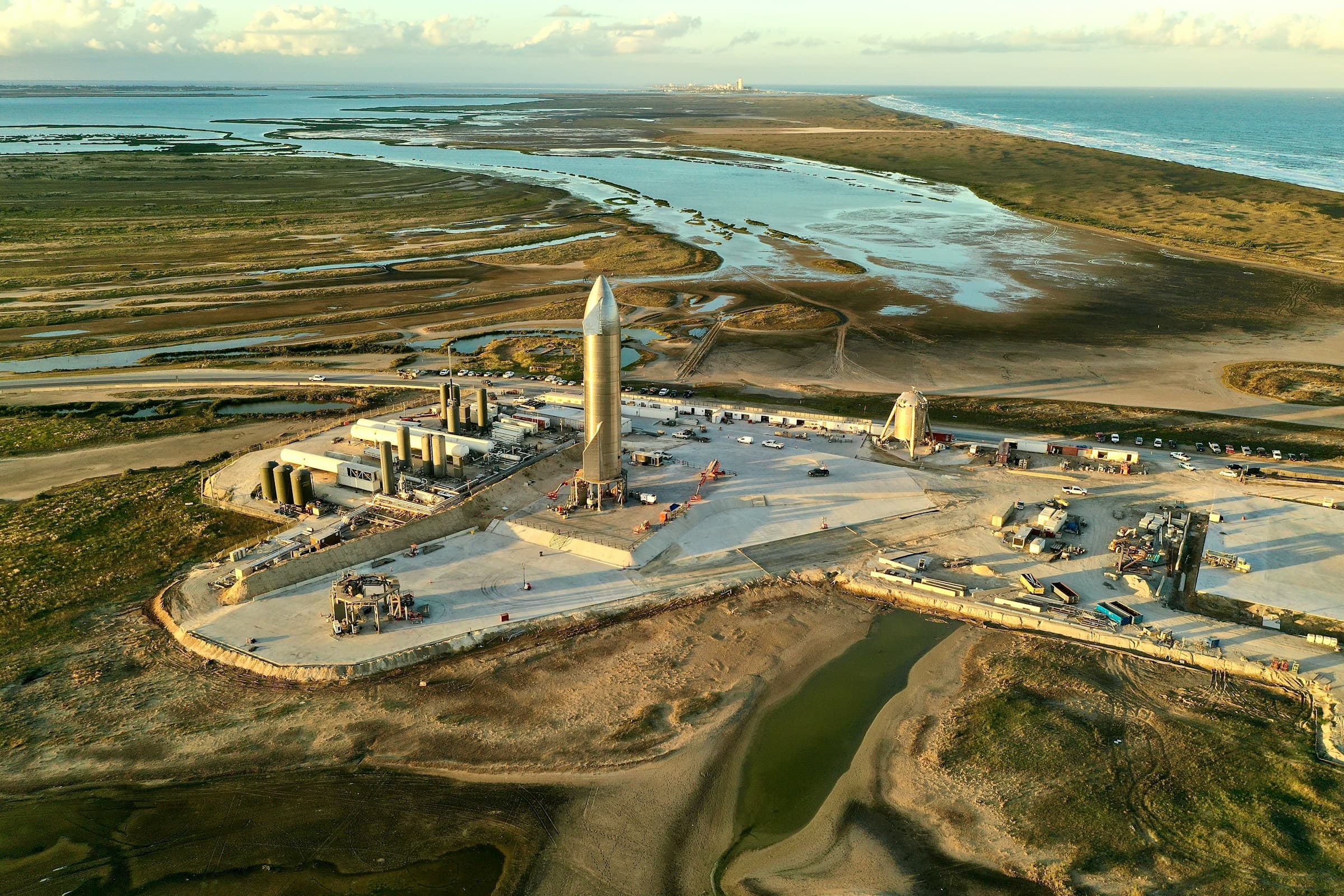
SpaceX Just Became a Hyperscaler — And Nobody Announced It
Here's my take: rockets are no longer the main event at SpaceX. Starlink used to be the profitable side hustle bolted onto a launch company. Now the company quietly runs a third business line that looks a lot like AWS or Google Cloud — minus the public SLA, minus the published pricing.
The Q2 2026 numbers make the case better than I could. SpaceX booked $7.8 billion in revenue, up 92% year-over-year. Nearly $2 billion of that growth came straight from the AI/compute segment, which grew 247% YoY to $2.56 billion — seven times what it was a year ago. Starlink still contributed $1.7 billion of growth, but it's no longer the only story investors should be tracking.
I've been covering enterprise infrastructure long enough to recognize a pivot when I see one, and this is one of the quieter ones I've watched. There was no cloud-division keynote, no rebrand, no press tour. SpaceX simply started billing for the excess GPU capacity it built to train Grok.
The quarter's net loss came in at $541 million — better than the $1 billion loss in Q2 2025 — but capex quadrupled in the first half of the year: $28 billion versus $7 billion in 2025. In Q2 alone, AI-segment capex ($15.8 billion) exceeded the company's entire quarterly revenue. On any traditional board, that ratio triggers an emergency session. At SpaceX, it's the strategy.
The Anthropic and Google Deals That Explain the Pivot
Why would Anthropic and Google — two of the best-capitalized companies on the planet — rent GPUs from a rocket company instead of building their own data centers? Speed. Colossus 1, the data center SpaceX originally built for xAI, went from ground to operational in roughly 122 days. Connecting a conventional data center to the grid can take five to ten years.
Anthropic gets exclusive access to all of Colossus 1 in Memphis — close to $40 billion across the life of the contract. Google's deal starts later, running from October 2026 through June 2029, with a 90-day exit clause it can exercise starting January 2027.
| Client | Monthly contract | Duration | Capacity | Exit clause |
|---|---|---|---|---|
| Anthropic | $1.25B/month | Through May 2029 | 220,000+ Nvidia GPUs, Colossus 1 | Not publicly specified |
| $920M/month | Oct. 2026 – Jun. 2029 | ~110,000 Nvidia GPUs | 90 days, starting Jan. 2027 |
Almost no financial coverage of this deal mentions the detail that actually matters: Google is a shareholder in both SpaceX (~6%, roughly $94.1 billion) and Anthropic (~14%, roughly $124 billion) — while paying SpaceX to serve both of them. The money loops back toward Google's own balance sheet in a way that's worth remembering before you read these contracts as simple market pricing. If you want to understand why Anthropic needs this much capacity in the first place, our breakdown of its cash burn after the latest funding round is worth a read.
The Elephant in the Room: SpaceX Rents to Its Rival's Rival
The elephant in the room is this: SpaceX owns xAI, and xAI's Grok competes directly with Anthropic's Claude. And yet SpaceX is renting Anthropic the exact infrastructure — Colossus 1 — that was originally built to train its own competitor.
It's unacceptable that enterprise coverage in 2026 still treats this as a routine transaction without naming the structural conflict underneath it. "Different business units" isn't an answer that survives scrutiny. If Grok needs more capacity to keep pace with Claude next quarter, what happens to Anthropic's contract? Does the tenant paying $1.25 billion a month get priority, or does the little sibling still fighting for market share? Nobody at SpaceX has answered that question publicly, and you won't find it in a press release.
Elon Musk previewed exactly where this is headed, in an internal meeting with employees:
"Definitely our AI revenue will exceed all other space revenue probably in September, like next month. […] We'll significantly exceed all other space revenue in the fourth quarter." — Elon Musk, SpaceX all-hands, 12 August 2026
Once compute outweighs rockets on the income statement, the question of who actually runs SpaceX — the space business or the AI business — stops being rhetorical.
The $6.7 Billion Nobody Will Claim
What nobody's telling you is that the Anthropic and Google contracts don't actually add up to all the money coming through the door.
On the earnings call, CFO Bret Johnsen dropped a number that barely registered in most coverage: on top of the $14.1 billion in cloud contracts signed during Q2, SpaceX added another $6.7 billion in the first weeks of July, with billing starting in October over a six-month stretch. He didn't attribute it to Anthropic. He didn't attribute it to Google either.
Do the math. Anthropic and Google were already priced in separately as of May and June, at roughly $15 billion and $11 billion annualized, respectively. Add the $14.1 billion from Q2 to this extra $6.7 billion, and total non-cancelable commitments comfortably exceed what the two known accounts contribute on their own. So who signed that third contract?
Nobody's saying.
That's the question any infrastructure team evaluating SpaceX as a vendor should actually be asking: is this company dependent on two named whales, or is it already diversifying its customer base toward buyers it hasn't disclosed?
What This Means for US Enterprise Buyers Weighing SpaceX as a Cloud Vendor
If your infrastructure team is even considering SpaceX as a fourth or fifth GPU supplier alongside AWS, Google Cloud, and the neoclouds, there are a few US-specific wrinkles worth flagging before procurement gets involved.
First, there's no published SLA, which means no contractual uptime guarantee to point to in an MTTR postmortem — you're negotiating blind, deal by deal, the way Anthropic and Google apparently did. Second, the cross-ownership structure here (Google holding stakes in both the vendor and one of its two anchor tenants) is the kind of arrangement that tends to draw a second look from antitrust regulators once a market gets this concentrated — SpaceX, xAI, Anthropic, and Google's own cloud business all touching the same GPU supply chain isn't a clean story for a compliance review. Third, SpaceX's compute business has zero track record on incident response, data residency commitments, or encryption-at-rest guarantees that a typical enterprise security questionnaire would demand. If you ask me directly: this isn't a vendor you onboard through a self-serve signup. It's a vendor you onboard through general counsel.
Starbase Louisiana: $100 Billion and the Flip Side
On August 25, 2026 — the same month these compute numbers came out — SpaceX announced a second Starbase: $100 billion earmarked for Vermilion Parish, Louisiana, with more than a dozen launch towers and a target of 30+ Starship flights per day. Construction is slated to start in 2027, with a first launch targeted for 2029. Louisiana's own projections cite 3,000 direct jobs at an average salary of $92,600, plus more than 30,000 construction jobs at peak build-out.
I haven't seen a single piece of coverage connect this dollar figure to the cash the compute business is now generating, and the connection is obvious once you lay the numbers side by side. Without the monthly billing already flowing in from Memphis and the Google deal, financing $100 billion in launch infrastructure with an AI-segment payback the CFO himself describes as "under a year" would be a much harder pitch to investors.
The other side of the announcement got a lot quieter treatment: groups including the Louisiana Wildlife Federation and the Pontchartrain Conservancy are already pushing back over wetland impact in Vermilion Parish, citing the environmental fine history at the original Texas Starbase. And the orbital data center roadmap — now pulled forward to late 2027 — depends on Starship achieving full booster-and-ship recovery on the same flight, something that hasn't happened yet.
The Verdict: Is SpaceX a Serious Compute Provider?
Let's be real: the honest answer is yes, but with caveats Bret Johnsen isn't going to repeat on the next earnings call.
I haven't had access to SpaceX's actual enterprise pricing outside these two anchor contracts, so I can't confirm whether its rates are competitive against what the established neoclouds already charge. That opacity is, frankly, part of the problem.
| Provider | Scale reference | Pricing transparency |
|---|---|---|
| SpaceX (compute) | Colossus 1 + Anthropic/Google contracts | No public pricing |
| CoreWeave | $99.4B backlog (March 2026) | Public pricing (H100 from $6.16/hr) |
| Nebius | $582.3M revenue in Q2 2026 (+454%) | Public pricing, including B300 |
| AWS / Google Cloud / Azure | Multi-region, mature SLAs | Full public catalog |
SpaceX has the scale and deployment speed that neither CoreWeave nor Nebius currently matches. What it doesn't have is what makes a hyperscaler trustworthy over the long haul: public pricing, a verifiable SLA, and the absence of a structural conflict with its own tenants. Nvidia's recent move to acquire Groq confirms the entire sector is reshuffling who controls AI compute, and SpaceX walked in through the front door — just not always for the cleanest reasons. With Anthropic and OpenAI both flirting with trillion-dollar IPOs, betting your infrastructure roadmap on a vendor with this many unresolved edges is a risk worth logging, not shrugging off.
Would you add SpaceX as a fourth GPU supplier tomorrow? I wouldn't — not without a signed SLA and pricing that doesn't depend on a phone call with the CFO's office.