Sarah Chen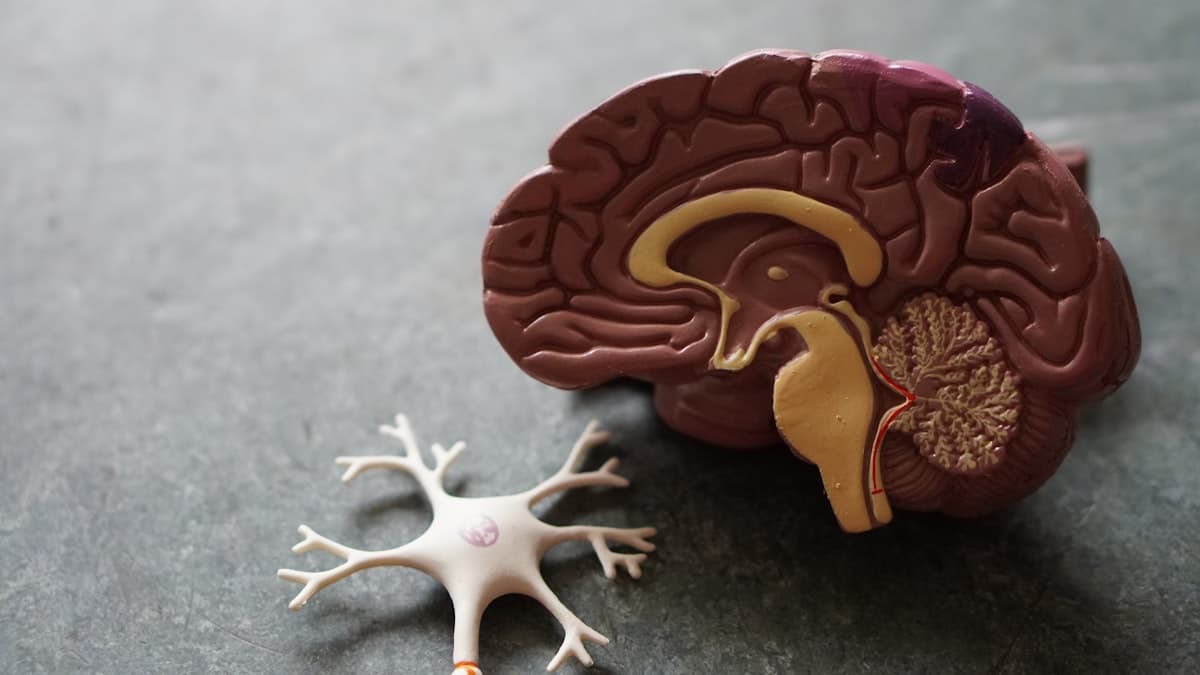
Sebastian: from medical student to Neuralink patient
Sebastian Gomez-Peña had just finished his first semester of medical school when his life changed forever. One summer day, he dove into a shallow pool. His head hit the bottom.
The result: broken neck, two front teeth knocked out, and paralysis from the neck down. Complete quadriplegia.
Let me break this down: Sebastian could no longer move his arms or legs. He couldn't type, couldn't use a phone, couldn't play video games. Everything he used to do with his hands was now impossible.
But that changed a few weeks ago.
The chip that reads thoughts
On January 30, 2026, Sebastian became world news. From a hospital room in London, he moved a cursor across the screen, opened files, and played a game of chess. Without touching anything. Just by thinking.
The trick is a coin-sized device implanted in his skull. It's the Neuralink chip, from Elon Musk's company that has spent years promising to turn science fiction into reality.
How it works (no jargon)
Think of it like this: your brain is like a biological keyboard. Every time you think about moving a finger, certain neurons fire in a specific pattern. The Neuralink chip does three things:
- Detects those electrical patterns with 1,024 microscopic electrodes
- Transmits the data wirelessly to an external computer
- Translates the patterns into actions: move cursor, click, type
The electrodes are connected to threads thinner than a human hair (10 times thinner, to be exact). A surgical robot inserts them 4 millimeters deep into the motor cortex, the brain region that controls hand and finger movement.
Sebastian's surgery took 5 hours. The next day, he was already moving the cursor.
21 patients worldwide: the current state
Sebastian isn't alone. There are currently 21 people worldwide with a Neuralink chip implanted:
| Country | Patients |
|---|---|
| United States | ~10 |
| United Kingdom | 7 |
| Canada | ~2 |
| United Arab Emirates | ~2 |
Among them are war veterans, car accident victims, and people with neurodegenerative diseases. They all share one characteristic: severe paralysis that prevented them from using digital devices conventionally.
What they can do now
- Browse the internet without touching anything
- Play competitive video games (one of them played Mario Kart)
- Write messages and post on social media
- Control smartphones and tablets with thought
- Play online chess at competitive speed
Noland Arbaugh, the first Neuralink patient in the US, described the experience: "Once you get a taste for using it, you don't want to stop. It's like having a superpower."
2026: the year of mass production
On December 31, 2025, Elon Musk posted a message that changed the entire industry's expectations:
"Neuralink will start high-volume production of brain-computer interface devices and move to a streamlined, almost entirely automated surgical procedure in 2026."
What most guides won't tell you is that this means a radical shift. Until now, each implant was almost artisanal. Surgery required a specialized team and hours of preparation.
Plans for 2026 include:
- Automated surgery: Neuralink's R1 robot will do most of the work
- No dura removal: threads now pass through this protective membrane without cutting it (this reduces risks)
- Industrial production: from dozens of chips to potentially thousands
Blindsight: restoring sight to the blind
But Neuralink isn't stopping at computer control. Its next goal is even more ambitious: making the blind see.
The project is called Blindsight, and it already has FDA "breakthrough device" designation (which accelerates approval). Here's the concept:
- An external camera captures video
- The Blindsight chip, implanted in the visual cortex, stimulates neurons
- The brain interprets those signals as vision
According to Musk, even people blind from birth could see for the first time, as long as their visual cortex is intact.
Realistic expectations
Musk has been clear: initially, vision will be "low resolution, like Atari graphics." Imagine seeing the world in 8-bit. But over time, he says, it could surpass natural human vision.
The first Blindsight human implants are planned for 2026.
The problems Neuralink prefers not to highlight
Not everything is perfect. The first patient, Noland Arbaugh, experienced a serious issue: some implant threads partially retracted, reducing the number of functional electrodes.
Neuralink responded with software updates that restored much of the lost performance. But the incident revealed that the technology is still experimental.
Other friction points:
- Animal deaths in testing: 2022-2023 reports documented deaths of monkeys and pigs during experiments
- Controversial FDA hire: Neuralink recruited David McMullen, an FDA executive who regulated the company
- Competitors with less invasive approaches: Synchron implants chips without opening the skull
The competition: Neuralink isn't alone
While Musk captures headlines, other companies are advancing with different approaches:
| Company | Method | Advantage | Investors |
|---|---|---|---|
| Neuralink | Direct brain surgery | Higher precision (1,024 electrodes) | Musk, private capital |
| Synchron | Jugular vein (no skull opening) | Less invasive, approved in Australia | Bill Gates, Jeff Bezos |
| Precision Neuroscience | Brain surface | Reversible, 37 patients tested | Ex-Neuralink founder |
Synchron, backed by Gates and Bezos, is particularly interesting: its chip is implanted through the jugular vein, without drilling into the skull. They already have patients controlling iPads and iPhones with thought, and a partnership with Apple for native integration.
The market: from $3.2 billion to $12.87 billion
The global brain-computer interface market is exploding:
- 2025: $3.21 billion
- 2034 (projection): $12.87 billion
- Annual growth: 16.7%
Neuralink leads in valuation ($9.65 billion) and has raised $1.2 billion to date. But the race is just beginning.
My conclusion: are we looking at the iPhone of the brain?
When Steve Jobs unveiled the iPhone in 2007, few understood they were seeing the future. Most saw it as an expensive phone with a touchscreen.
Neuralink might be at a similar moment. Today it seems like technology for extreme cases: people with severe paralysis who have no alternatives. But if production scales, costs drop, and risks minimize... applications could expand.
Imagine writing an email just by thinking it. Imagine controlling your smart home with your mind. Imagine "remembering" information downloaded directly into your brain.
Musk has explicitly said the ultimate goal isn't just medical: it's "symbiosis with artificial intelligence." Preparing humans for a world where AI is so superior that we need to augment our own capabilities to remain relevant.
But that's the distant future. Today, what we have is Sebastian Gomez-Peña playing chess without moving a muscle, regaining a piece of independence that an accident took away.
And that, for now, is revolutionary enough.
Frequently asked questions
How many patients does Neuralink currently have?
Neuralink has 21 patients with brain implants worldwide: approximately 10 in the US, 7 in the UK, and the rest in Canada and the United Arab Emirates.
What can patients do with the Neuralink chip?
Patients can control computers, smartphones, and tablets using only their thoughts. This includes moving cursors, typing, browsing the internet, playing video games, and posting on social media.
When will Neuralink start mass production?
Elon Musk announced that Neuralink will begin high-volume production in 2026, along with almost entirely automated surgical procedures.
What is Neuralink's Blindsight?
Blindsight is an implant designed to restore vision in blind people. It connects an external camera to the brain's visual cortex, allowing "sight" even for people blind from birth. The first human implants are planned for 2026.
Is the Neuralink implant safe?
The technology is still experimental. The first patient experienced partial thread retraction, though it was corrected with software. Neuralink has passed FDA approvals for clinical trials but doesn't yet have full commercial approval.